
Electron Microscopy Unit
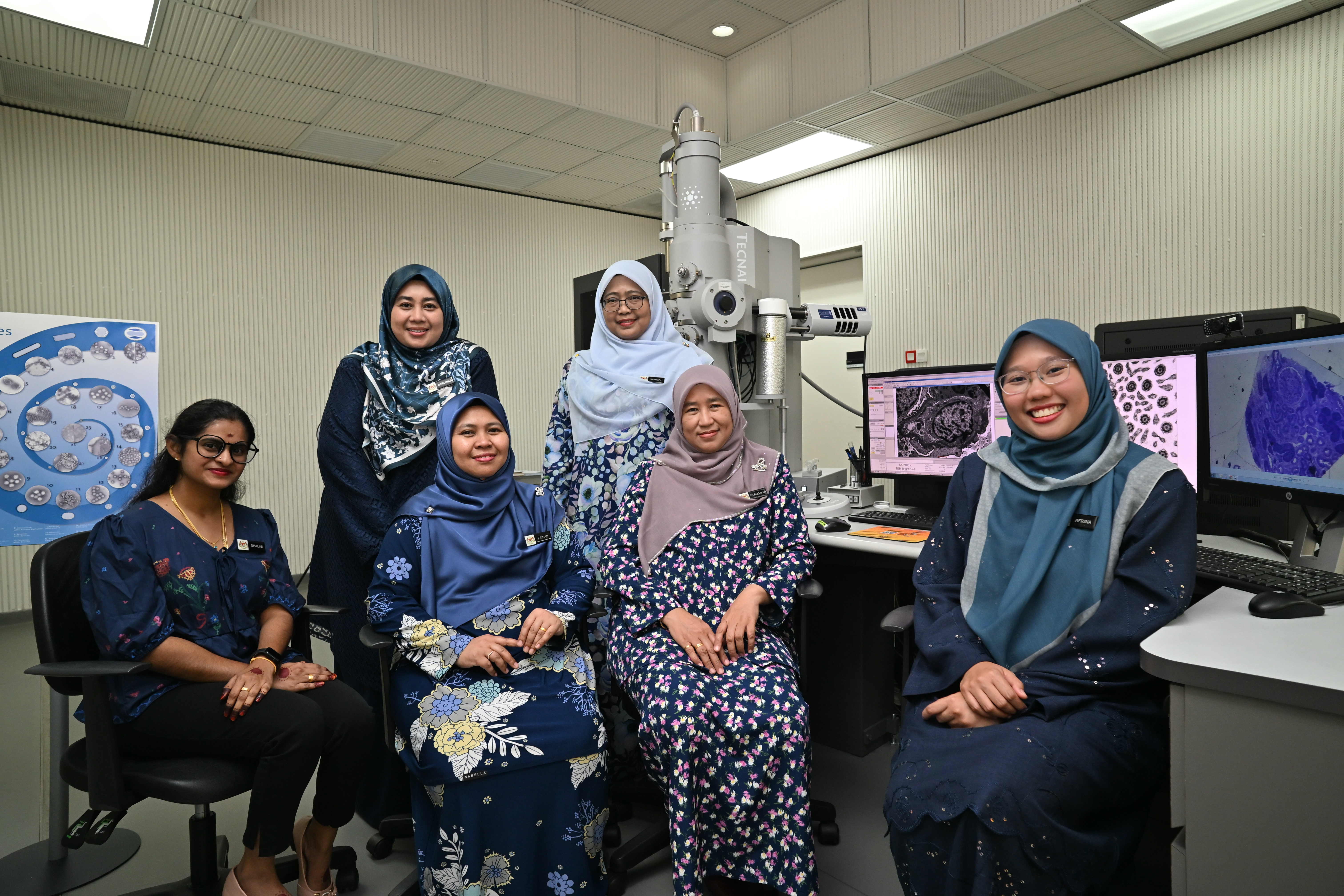
Electron Microscopy Unit
The Electron Microscopy Unit's objectives were to provide specialized diagnostic services to hospitals, enables rapid visualization of virus at high resolution during outbreak investigations by identifying viral morphology further confirming the presence of the virus, as well as to support and complement research activities.
In its diagnostic functions, the unit has been involved in the diagnosis of native kidney diseases and, in some instances, kidney transplants in Malaysia. These services, previously unavailable in any MOH hospitals, have made a significant contribution to the diagnosis of biopsy samples by complementing other diagnostic techniques, such as light microscopy and immunofluorescence, by providing ultrastructural details for accurate diagnosis.
The unit also supports and complements research activities in IMR, other institutions, and universities by providing consultations, technical expertise, and training on the application of EM to improve and strengthen research activities during proposal preparation and throughout the research process, from implementation to data analysis.
Executive Summary
Head of Electron Microscopy Unit
Mrs. Tengku Rogayah binti Tengku Abdul Rashid
BSc. Zoology (Hons) (UM, Malaysia), MSc. Entomology (UKM, Malaysia)
Google Scholar | ResearchGate | ORCID
Telephone: +603-3362 8942
Email: tg_rogayah@moh.gov.my

Human Resource Profile
Research Officers
Science Officer
Assistant Science Officers
Support Staffs
Focus Area
Disease Investigation & Diagnosis
Scope: Diagnostics
Highlights:
Rapid diagnosis of infectious disease outbreaks by enabling the direct visualization of viral particles in clinical samples
Discovery
Scope: Taxonomy / method development
Highlights:
Detailed visualization of vector anatomy and ultrastructure for understanding the compound effect on the vector morphology
- Optimization of sample preparation and imaging techniques across a wide range of specimen types, including clinical samples, environmental samples, and biological tissues
- Supports innovation in diagnostic and experimental protocols, thus accelerating research and the public health area
Disease Prevention
Scope: vaccine development
Highlights
Characterizing viral morphology, and assessing the integrity of vaccine candidates such as virus-like particles