SERVICES
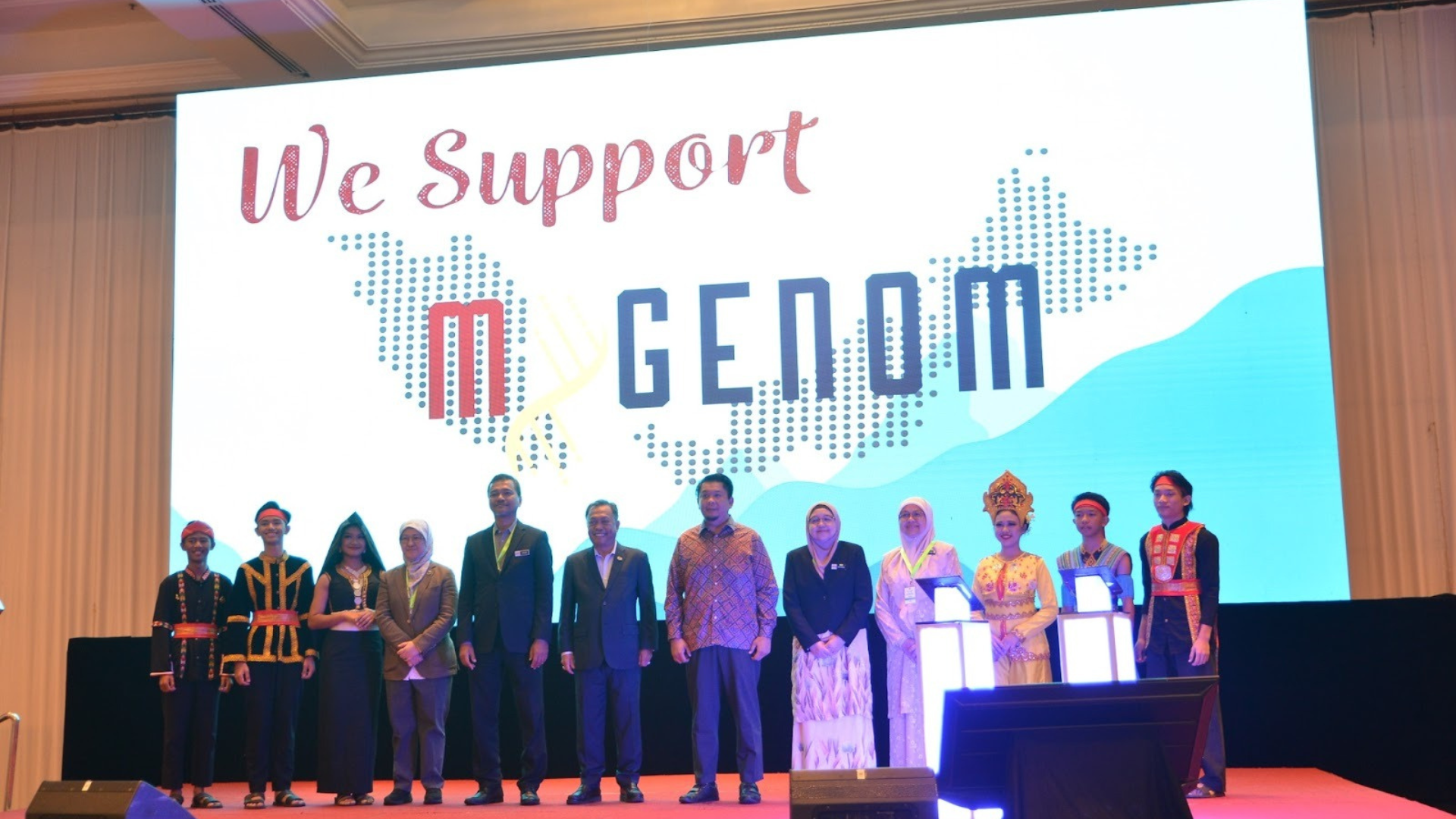
MyGENOM

Overview
MyGENOM is a national flagship initiative led by the Institute for Medical Research (IMR) under the Ministry of Health Malaysia (MOH), in collaboration with the Ministry of Science, Technology and Innovation (MOSTI). It is currently completing its first phase of Malaysia’s national population genomics effort aimed at sequencing 10,000 genomes to develop a Malaysian reference genome representative of the nation’s rich genetic diversity.
Through large-scale sequencing and integrated data analysis, MyGENOM explores the genetic variation within Malaysia’s multi-ethnic population to better understand disease risk, treatment response, and health outcomes. This foundational effort is driving the nation’s transition toward precision medicine, enabling more personalised approaches to prevention, diagnosis, and therapy, and paving the way for more equitable and effective healthcare solutions for all Malaysians.
Research Objectives
- To develop a Malaysian reference genome representative of the country’s multi-ethnic population
- To identify genetic variants linked to disease susceptibility, drug response, and health traits
- To establish biospecimen and data infrastructures that support genomics-driven health research.
- To strengthen capacity and expertise in genomics, bioinformatics, and translational medicine.
Translational Potential
MyGENOM bridges genomic discovery with clinical application by:
- Integrating genetic findings into disease risk prediction and precision screening programmes.
- Supporting the development of diagnostic tools and clinical decision frameworks based on genetic insights.
- Enabling collaborations that translate genomic data into actionable health policies and improved patient care.
IMR’s Contribution
The Institute for Medical Research serves as the scientific and technical lead for MyGENOM, contributing expertise in:
- Study design, recruitment, and biospecimen management across multiple centres nationwide.
- High-throughput sequencing, data curation, and bioinformatics analysis.
- Quality assurance and ethical governance for national genomic data.
- Collaborative platforms connecting clinical, academic, and international research networks.
Gallery